
No products in the cart.
How to Layer a Leather Vest for Year-Round Riding
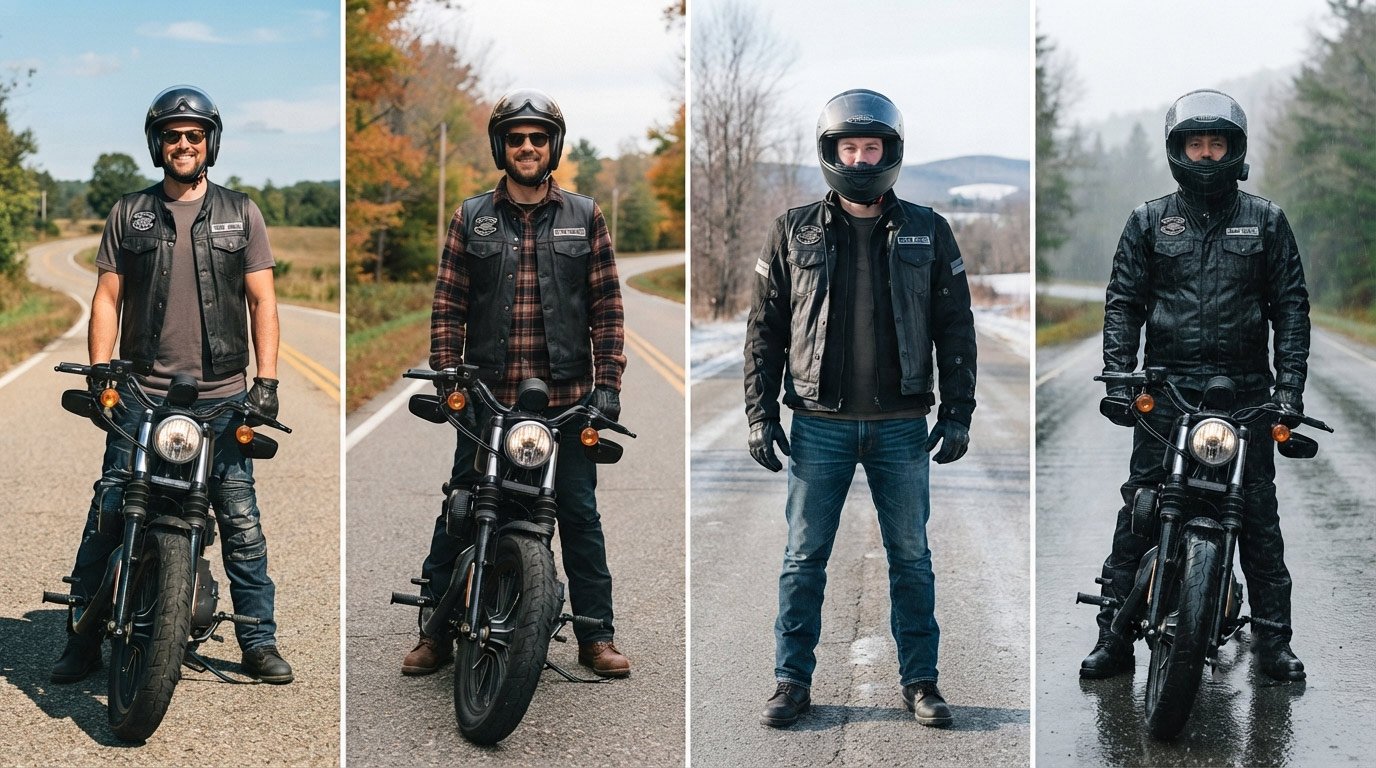
In summer, wear the vest alone over a lightweight or moisture-wicking shirt. In fall and spring, layer it over a flannel or thermal shirt. In winter, the vest becomes a mid-layer — worn over your base layer and underneath your primary riding jacket, where it adds real insulation. Size for your heaviest likely layering combination, not your bare chest.
Why a Vest Works as a Layering Piece
A vest earns its place in a riding wardrobe because of what it isn’t: a jacket. Leaving the arms exposed means no restriction at the shoulders and instant ventilation the moment temperatures climb. At the same time, it protects the torso — where heat loss is fastest and where wind chill hits hardest at highway speed — without the weight and bulk of a full jacket.
Understanding that split — arms free, core covered — is the key to layering a vest correctly in any season.
Summer: Vest Alone Over a Light Layer
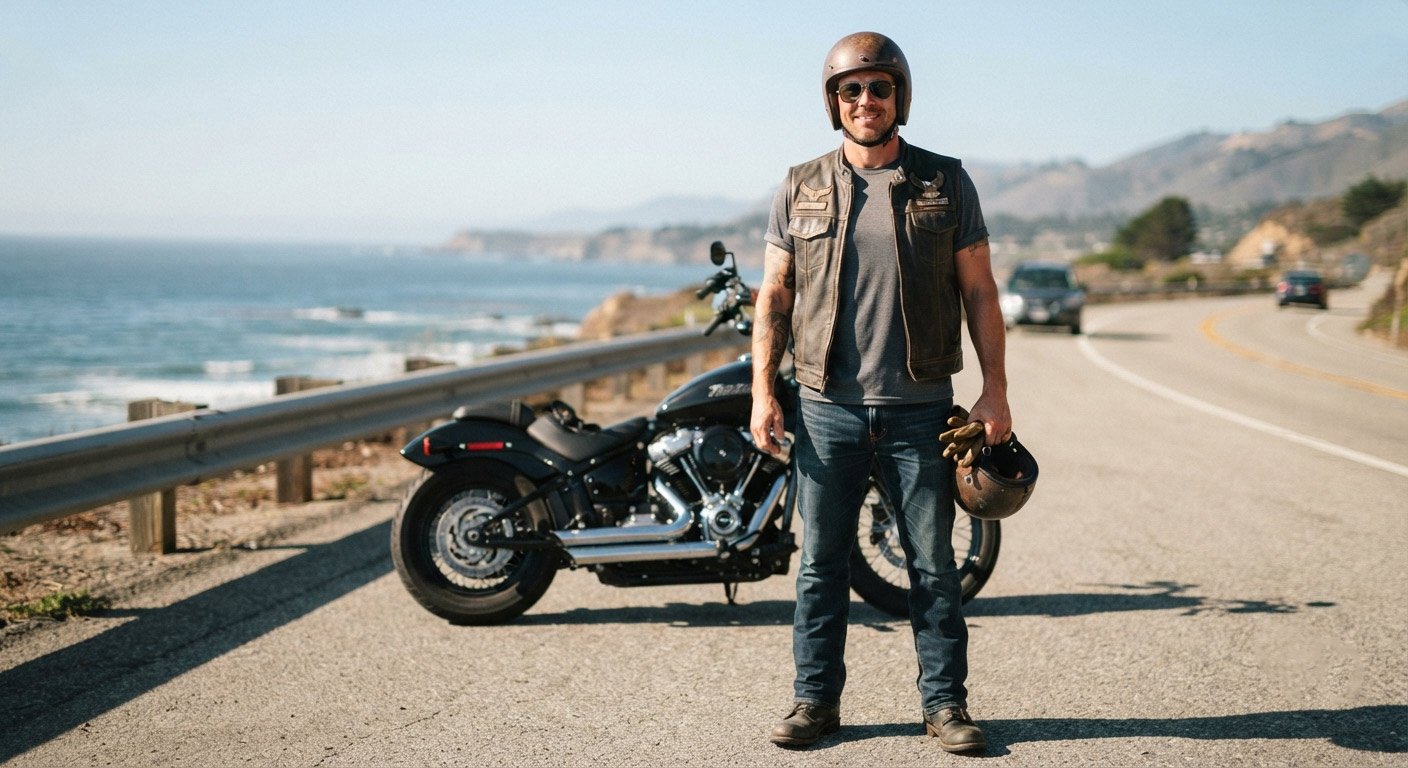
Above roughly 70°F, wear the vest directly over a lightweight long-sleeve shirt or a moisture-wicking base layer. The vest handles wind resistance and some sun protection across the torso; the exposed arms handle cooling.
Leather weight matters more in summer than any other season. A standard vest is built to insulate as much as it looks good, and in 90°F+ heat that insulation works against you. Lighter cowhide (around 1.0–1.2mm) rides noticeably cooler than heavier steerhide or buffalo. If you’re ordering primarily for hot-weather use, mention that when selecting your leather — and consider a mesh or unlined back panel over a quilted or satin lining, since mesh wicks sweat while heavier linings trap it.
Fall and Spring: Vest Over a Flannel or Thermal
In the 50–70°F range, the vest moves from a standalone piece to outer layer over real insulation — typically a flannel or thermal long-sleeve shirt.
Watch the side-lace fit here: a medium-weight hoodie or flannel adds roughly an inch of circumference at the torso. If your vest’s side laces are fully closed for a summer fit, you’ll need to loosen them to accommodate the added layer without pulling at the armholes or restricting shoulder movement.
Winter: Vest as a Mid-Layer, Not an Outer Layer
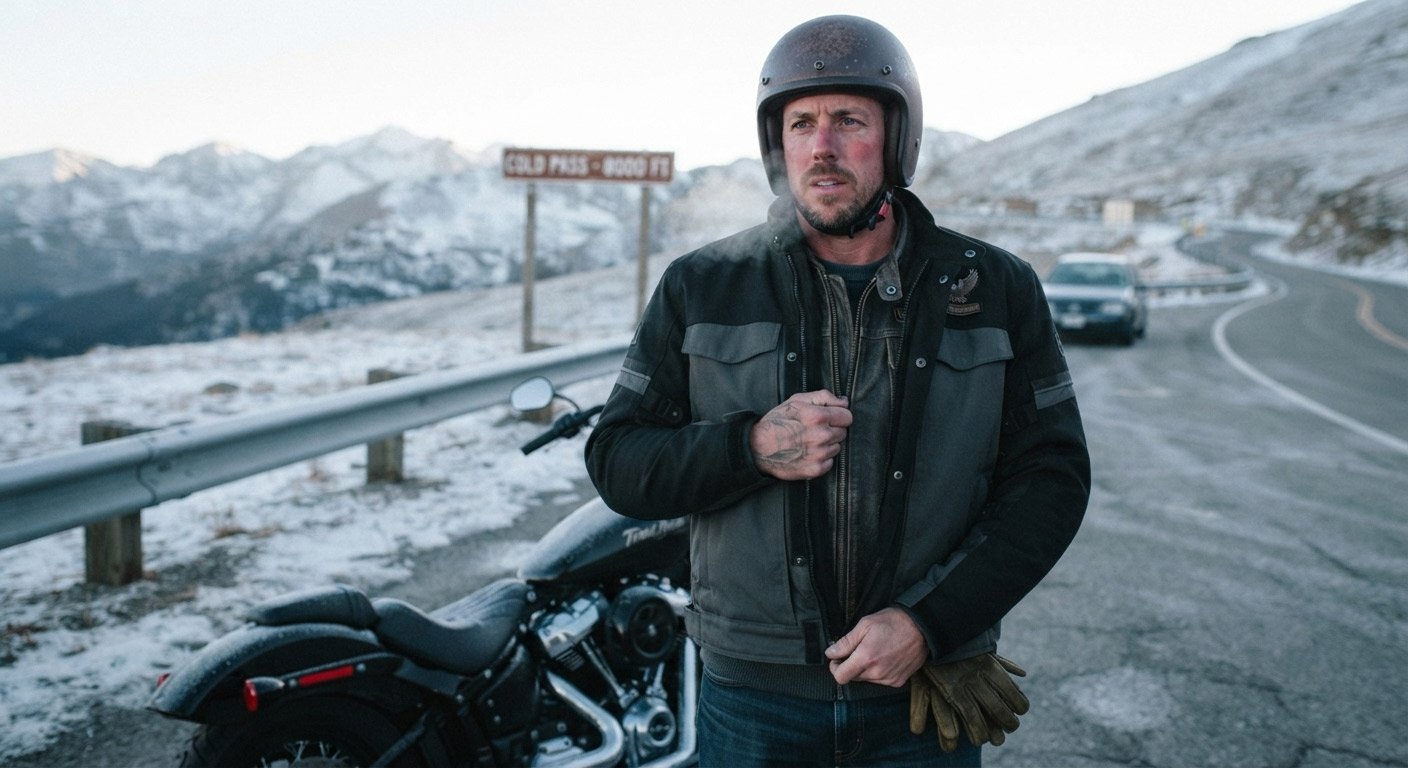
Below about 50°F, the layering order changes: base layer first, vest over that, then your primary riding jacket over the vest. In this configuration, the vest adds a barrier of still air against your core that meaningfully increases warmth — it’s functioning as insulation, not as the outer shell.
This is where heavier leather earns its keep cowhide or buffalo for insulating density, or a shearling vest for maximum cold-weather warmth, since the fleece lining is built specifically for this role. See our leather type comparison for the full thickness and weight breakdown.
Season-by-Season Quick Reference
| Season | Vest Role | What Goes Underneath | Leather Weight |
|---|---|---|---|
| Summer (70°F+) | Outer layer, worn alone | Moisture-wicking tee or light long-sleeve | Lighter cowhide, ~1.0–1.2mm |
| Fall / Spring (50–70°F) | Outer layer over insulation | Flannel or thermal shirt | Standard 1.2–1.4mm |
| Winter (below 50°F) | Mid-layer, under jacket | Base layer, vest, then outer jacket | Heavier cowhide, buffalo, or shearling |
| Rain | Outer layer, treated | Same as season, plus waterproofing spray | Any — treat before riding season |
The Sizing Trade-Off
This is the part riders get wrong most often: sizing the vest to a bare chest, then finding it pulls at the armholes the moment a hoodie or flannel goes underneath in fall. Armhole width is fixed once a vest is built — it can’t be let out later — but a side-lace torso can flex by an inch or two.
The fix: size for your heaviest realistic layering configuration, not your bare chest, and let side laces take up the slack on warm days. Full measurement instructions are in our sizing guide.
A Note on Protection
A leather vest is a wind, warmth, and identity piece first — it covers the torso and leaves the arms fully exposed, so it isn’t a substitute for an armored riding jacket. If crash protection is a priority on a given ride, wear the vest over an armored jacket or riding shirt rather than relying on it alone.
FAQ (for schema markup)
Q: Can you wear a leather vest year-round?
A: Yes, as long as you change how it’s layered by season — worn alone over a light shirt in summer, over a flannel or thermal in fall and spring, and as a mid-layer under a jacket in winter.
Q: What leather weight is best for summer riding?
A: Lighter cowhide, around 1.0–1.2mm, rides cooler than heavier steerhide or buffalo, and a mesh or unlined back panel helps with breathability compared to a quilted or satin lining.
Q: How should you size a vest for layering?
A: Size for your heaviest realistic layering combination rather than your bare chest, since armhole width can’t be adjusted later — side laces can take up the slack on warmer days.
Q: Does a leather vest replace an armored riding jacket?
A: No. A vest covers the torso and leaves the arms exposed, so it functions as a wind, warmth, and identity piece rather than crash protection — wear it over an armored jacket if protection is a priority.
About author

Related posts
A good leather motorcycle vest comes down to five decisions: the right leather type for your riding style, an accurate chest-based size, a pocket layout... Continue reading
Side-lace vests use adjustable lacing at the ribcage for roughly 3–4 inches of torso adjustment — useful for riders who layer heavily by season or... Continue reading
A patch-ready back panel is a single, uninterrupted piece of leather with no vertical center seam, cut from leather in the 2–3oz range (about 0.8–1.2mm)... Continue reading
A true CCW-ready vest has one or more interior pockets sized and positioned to hold a holstered handgun at mid-chest level, opening toward the front... Continue reading
Pocket configuration should match how you actually carry, not how a vest looks on a rack. Riders who run saddlebags need only 2–4 pockets; everyday... Continue reading
Add comment