
No products in the cart.
Why Back Panel Construction Matters for MC Patches
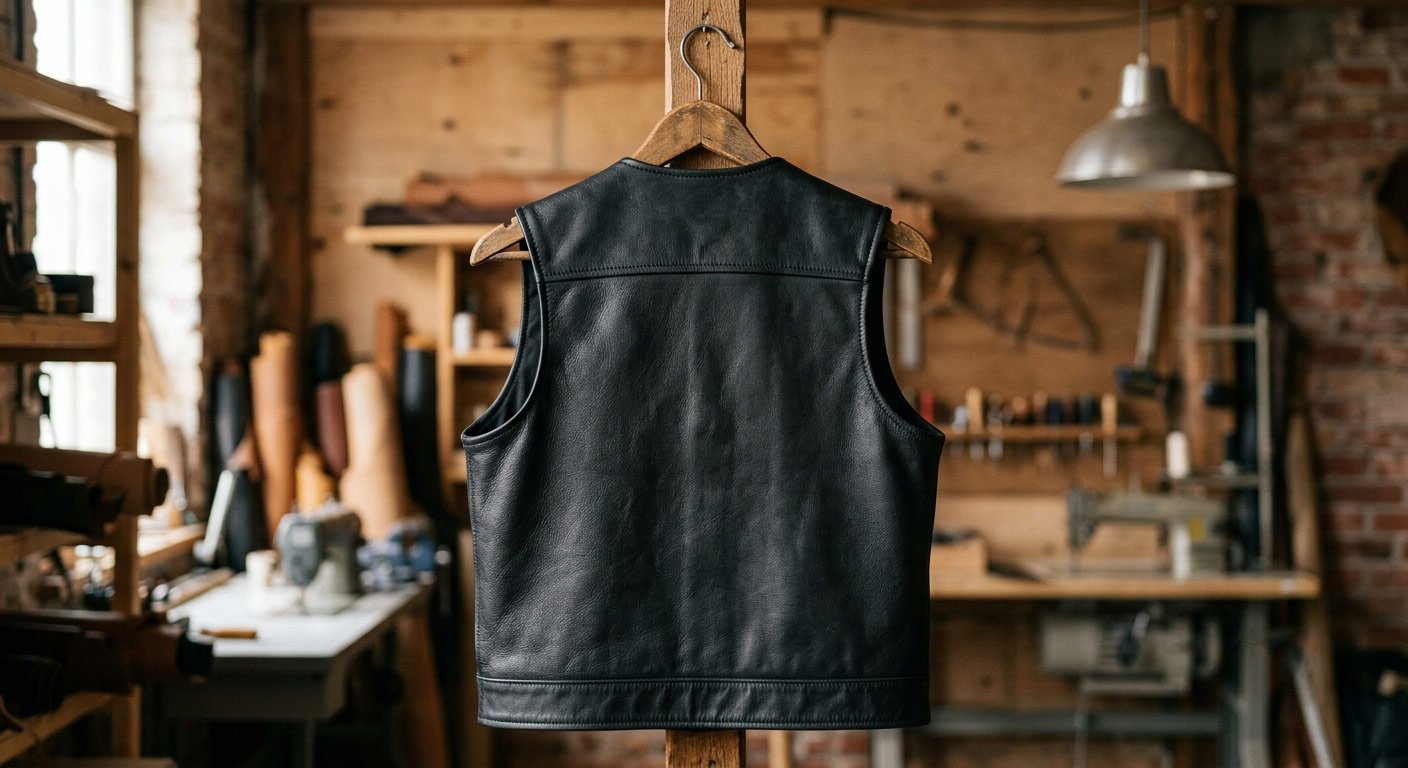
A patch-ready back panel is a single, uninterrupted piece of leather with no vertical center seam, cut from leather in the 2–3oz range (about 0.8–1.2mm) — heavy enough to hold embroidered patches flat without curling at the edges, but not so heavy it becomes stiff or hard to sew through. A seam running through the display area limits placement, visually divides the panel, and can distort patches stitched across it.
Why the Seam Matters More Than It Looks Like It Should
A back panel built from two pieces of leather joined at a center seam is a construction shortcut, not a design choice. That seam runs directly through the space where a three-piece patch set is meant to sit, which creates two real problems: it limits how patches can be positioned relative to the seam line, and it visually splits what should read as one continuous surface.
This is why single-piece backs are treated as a non-negotiable standard by every serious vest maker — not a premium feature, but the baseline requirement for a vest intended to carry patches.
Leather Weight: The Part Most Buyers Never Ask About
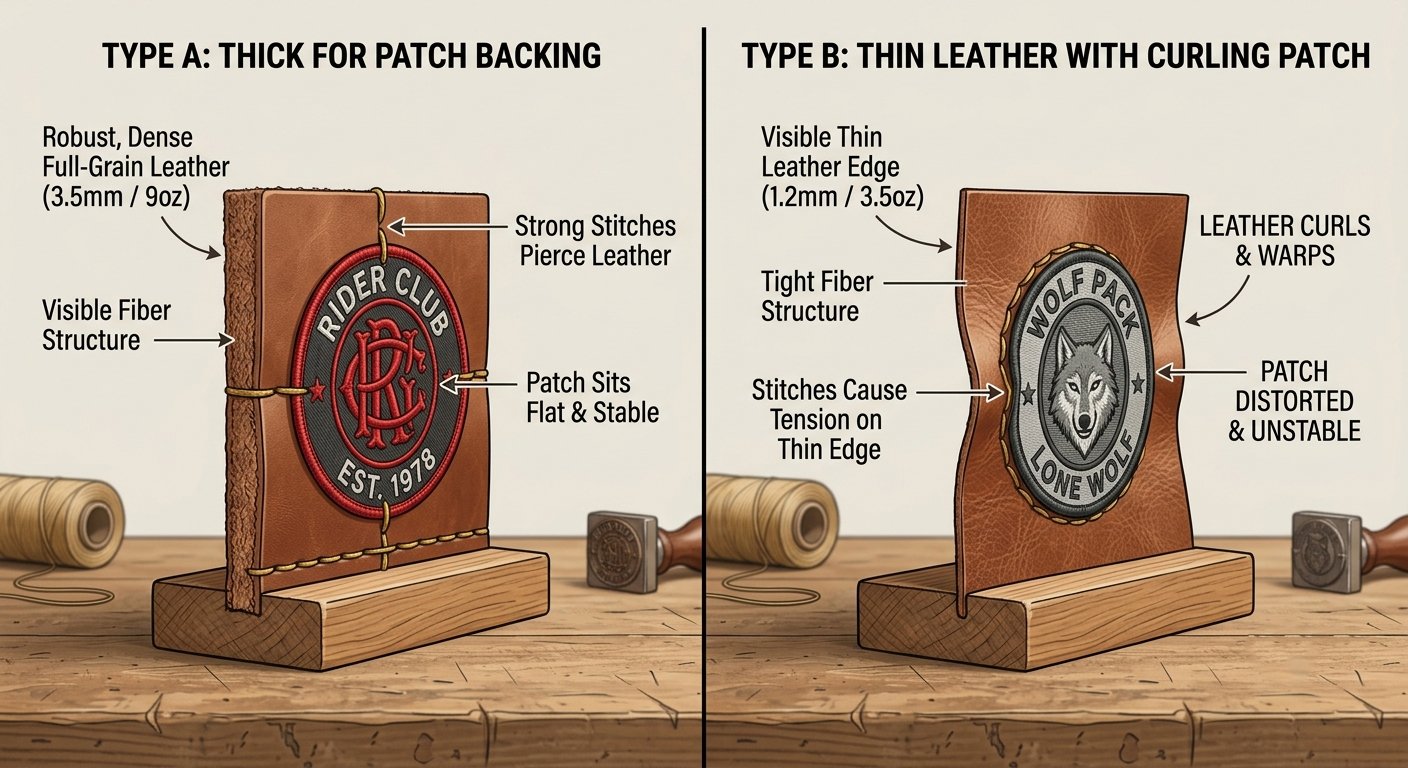
A back panel needs enough hide thickness to hold embroidered patch backing without the leather thinning or distorting at the stitch points. The generally accepted range for a patch-display back panel is 2–3oz — roughly 0.8–1.2mm — which balances structure against flexibility. Leather under 2oz is too thin for this job: it thins further at every seam and pocket edge, and a heavy patch load will cause it to curl or pucker over time.
This is a separate decision from leather type — cowhide, buffalo, or another hide can all be built to the correct weight. See our leather type comparison for how thickness varies across leather types.
Rocker and Patch Dimensions
For riders planning a full three-piece set (top rocker, center patch, bottom rocker), panel dimensions and patch proportions work together. Getting the spacing right is what makes a finished set read as a cohesive statement rather than three unrelated pieces stitched onto the same vest.
| Element | Typical Dimension | Position |
|---|---|---|
| Top rocker | 10–12″ wide, arched | Immediately below the collar seam, following the shoulder curve |
| Center patch | Sized to dominate the middle third | Centered on the vertical midline |
| Bottom rocker | Matches center patch width, arched | Close to the bottom hem |
| Gap between pieces | 0.25″–1″ (roughly 1–2.5cm) | Even spacing above and below the center patch |
| Back panel leather weight | 2–3oz (approx. 0.8–1.2mm) | Full panel — heavy enough to hold patches flat without curling |
Nothing is placed above the top rocker — it’s always the uppermost element on the back panel. The center patch dominates the middle third of the panel, and the bottom rocker sits close to, but not touching, the bottom hem.
Hide Selection Matters for Color Consistency
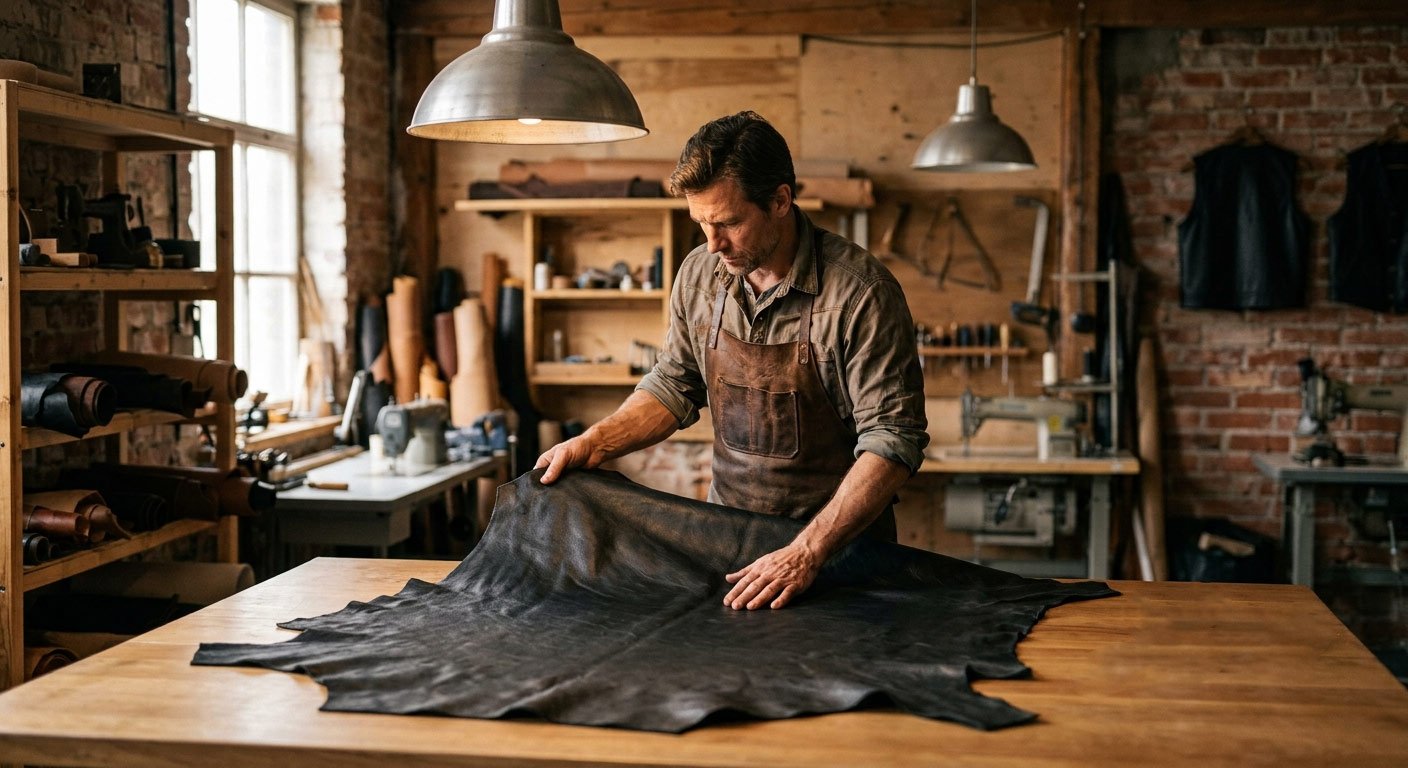
A back panel is typically cut from the best section of a hide specifically for grain and color consistency across the full display surface — a patch stitched onto a panel with visible color or texture variation stands out for the wrong reasons. This is a detail that shows up under close inspection but is easy to overlook when ordering.
What This Means When You Order
- Confirm single-piece back panel construction — no vertical center seam — before ordering if patches are part of the plan
- Ask about back panel leather weight if you’re planning a full three-piece set with substantial embroidered backing
- If working with oversized custom artwork, confirm panel dimensions against your specific patch sizes rather than assuming standard sizing fits
- Leave the decision of pre-attached vs. blank panel clear in your order notes — see our patch attachment guide for both options
Build a Patch-Ready Vest
Every LMCV vest features a single-piece back panel at patch-appropriate leather weight as standard. See our How to Attach Patches to a Leather MC Vest guide for sewing and placement, the Custom Leather Motorcycle Vest Guide for the full picture, or start an order through Bulk Order for club sets.
FAQ (for schema markup)
Q: Why does a leather vest need a single-piece back panel?
A: A center seam running through the back limits how patches can be positioned and visually divides the display surface. A single, uninterrupted piece of leather is the standard requirement for a vest intended to carry a full patch set.
Q: What leather weight is best for a patch-ready back panel?
A: Roughly 2–3oz, or about 0.8–1.2mm, balances the structure needed to hold patches flat against the flexibility needed for comfortable wear. Leather under 2oz is generally too thin and will thin further at stitch points under a heavy patch load.
Q: How wide should a top rocker be on a motorcycle vest?
A: Typically 10 to 12 inches, arched to follow the natural curve of the shoulder line, positioned immediately below the collar seam as the uppermost element of a three-piece set.
About author

Related posts
A good leather motorcycle vest comes down to five decisions: the right leather type for your riding style, an accurate chest-based size, a pocket layout... Continue reading
Side-lace vests use adjustable lacing at the ribcage for roughly 3–4 inches of torso adjustment — useful for riders who layer heavily by season or... Continue reading
A true CCW-ready vest has one or more interior pockets sized and positioned to hold a holstered handgun at mid-chest level, opening toward the front... Continue reading
In summer, wear the vest alone over a lightweight or moisture-wicking shirt. In fall and spring, layer it over a flannel or thermal shirt. In... Continue reading
Pocket configuration should match how you actually carry, not how a vest looks on a rack. Riders who run saddlebags need only 2–4 pockets; everyday... Continue reading
Add comment