
No products in the cart.
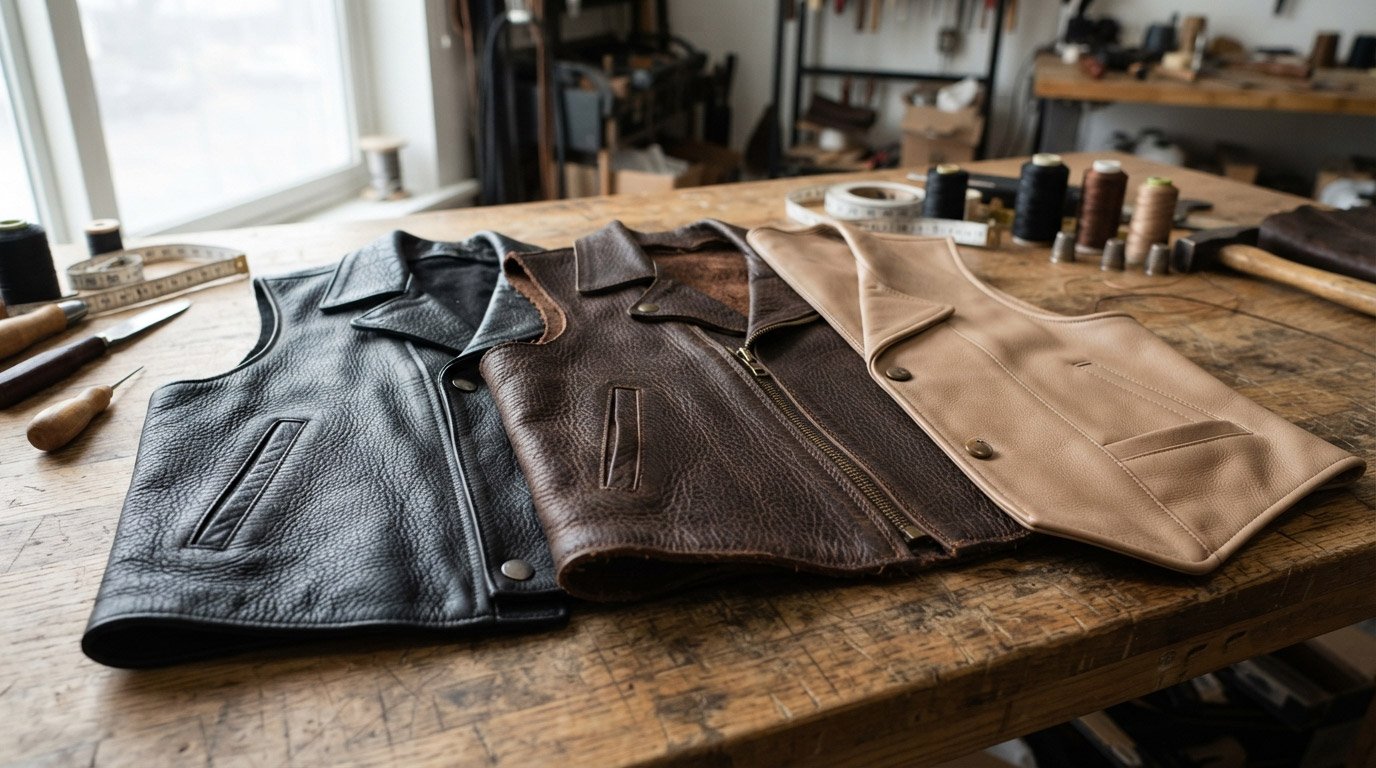
Cowhide vs. Buffalo vs. Lambskin: Which Leather Vest Fits Your Ride?
Cowhide is the all-around standard for motorcycle vests — durable, moderately priced, and it breaks in well. Buffalo is the toughest and thickest option for riders who want maximum abrasion resistance and don’t mind a longer break-in. Lambskin is the softest and lightest choice, best for comfort and warm-weather riding, but it trades away durability.
Leather type affects everything about how a vest performs: how it feels in the first month you own it, how it holds up after five years of riding, and how much it weighs on a long day in the saddle. Here’s how the three most common vest leathers actually compare.
Cowhide: The Industry Standard
Cowhide has been the default choice for motorcycle leather since the earliest days of riding gear, and the reason hasn’t changed: adult cattle hide has long, tightly packed collagen fibers that give it the density needed for real abrasion resistance. Most vest-weight cowhide runs 1.0–1.4mm thick.
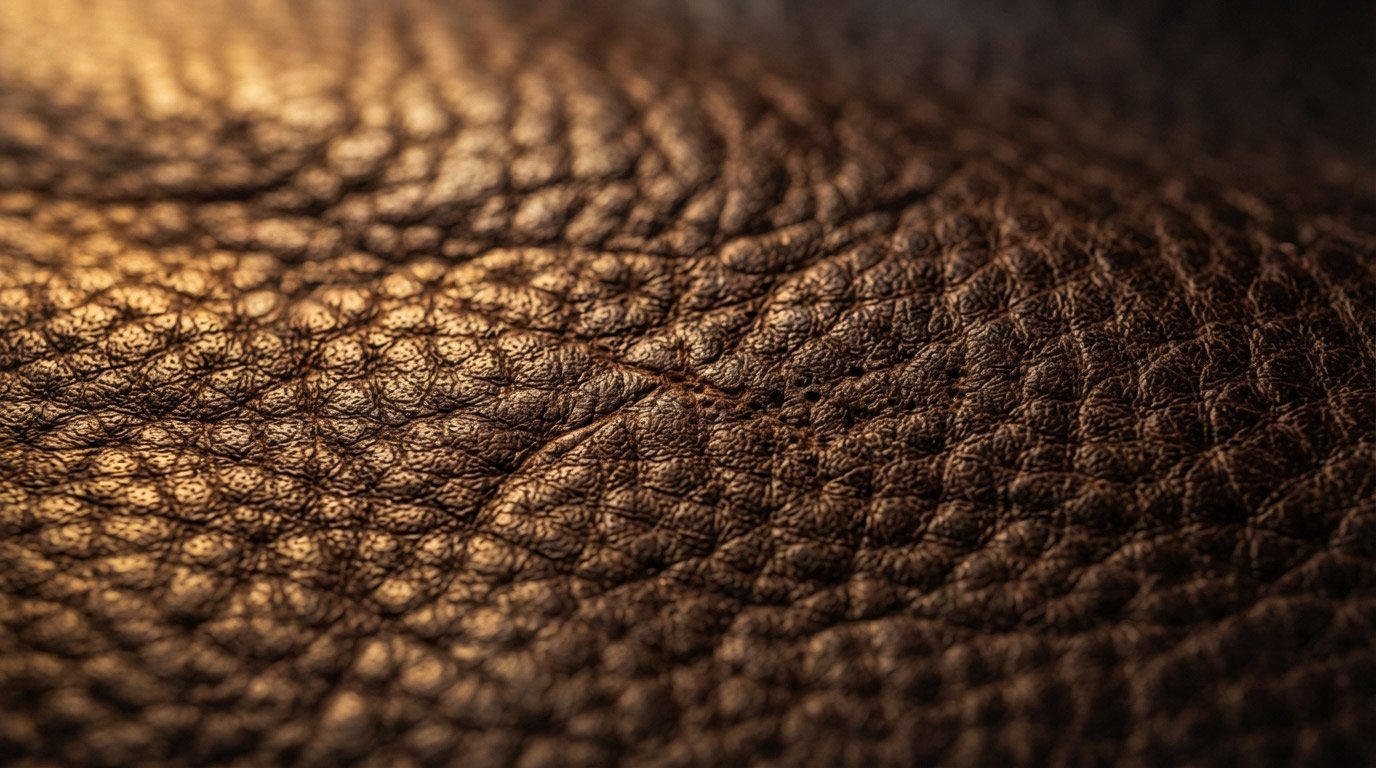
New cowhide feels stiff at the shoulders and front panels. That’s normal — the fibers loosen with wear, and most riders find a cowhide vest settles into a comfortable, body-molded fit after roughly 15 to 20 wears. That break-in period is part of why cowhide develops such a distinctive, personal patina over the years — the leather is quite literally shaped by the rider wearing it.
Best for: riders who want one vest that handles daily wear, club rides, and years of use without babying it.
Buffalo: Maximum Toughness
Buffalo leather is thicker and more heavily textured than cowhide, with a pebbled grain that gives it an unmistakable rugged look. It’s the leather riders reach for when durability is the only priority — the fibrous structure resists tearing and holds up to years of hard use, which is why vintage and classic-style vest builds lean on it so often.
The tradeoff is break-in time and weight. Buffalo takes longer to soften than cowhide, and it’s noticeably heavier — worth factoring in if you’re wearing your vest for long stretches rather than short rides.
Best for: riders who prioritize maximum durability and a heavier, old-school build over lighter weight.
Lambskin: Softest and Lightest
Lambskin comes from young sheep, and its fiber structure is naturally finer and less dense than cowhide or buffalo. That gives it two clear advantages: it’s roughly 40–50% lighter, and it needs no break-in at all — a lambskin vest feels finished the day it arrives.
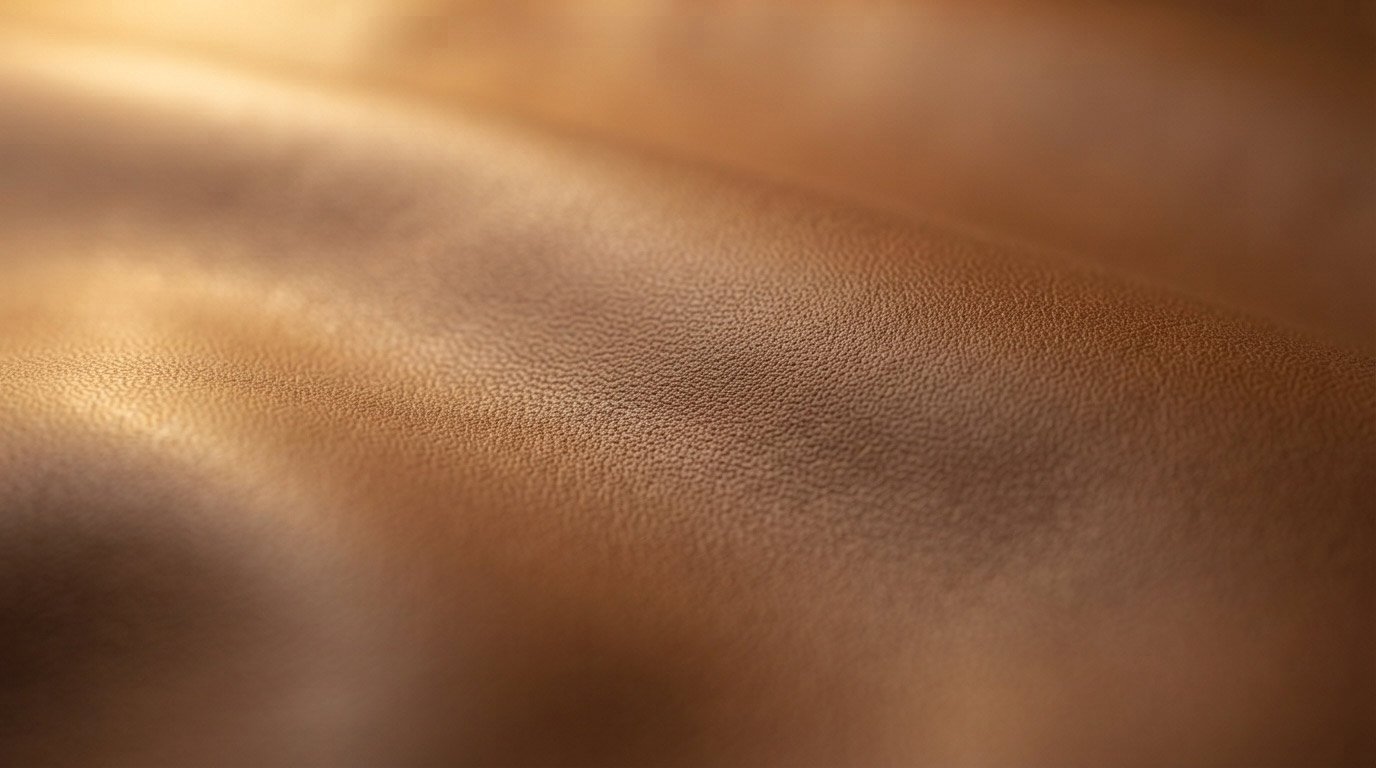
The tradeoff is durability. Lambskin’s thin, porous structure isn’t built for hard abrasion, and it dries out faster than heavier hides, so it needs more frequent conditioning to stay supple. It’s a strong choice for warm-climate riding, casual wear, and fashion-forward builds — less so for daily hard-mile club riding.
Best for: comfort-first riders, warm climates, and vests worn as much off the bike as on it.
Side-by-Side Comparison
| Cowhide | Buffalo | Lambskin | |
|---|---|---|---|
| Typical thickness | 1.0–1.4mm | 1.3–1.8mm | 0.7–1.0mm |
| Weight | Baseline | Heaviest | 40–50% lighter than cowhide |
| Break-in period | 15–20 wears | Longest — settles slowly | None — soft from day one |
| Abrasion resistance | High | Highest | Lowest of the three |
| Best for | All-around riding, MC cuts | Heavy daily wear, vintage look | Comfort, warm climates, fashion fit |
| Patina development | Rich, classic | Deep, rugged | Fast, but leather is more delicate |
What About Goats, Sheep, and Deer?
Beyond the big three, LMCV also works with goatskin, sheepskin, and deer leather. Goatskin splits the difference well — thinner than cowhide but with a tight fiber structure that punches above its weight for durability, plus low-maintenance natural oils that resist drying. Deer leather is naturally water-resistant and highly breathable, a strong pick for riders who prioritize comfort in changing weather.
For cold-weather riding specifically, see our layering guide and the Shearling Vest collection, where the leather-outside, fleece-inside construction changes the comparison entirely.
Full-Grain vs. Top-Grain — A Separate Decision
Leather type (cowhide, buffalo, lambskin) is one decision. Grade (full-grain vs. top-grain) is a second, independent one. Full-grain keeps the complete outer hide layer with all its natural character and the best long-term durability; top-grain is sanded smoother for a more uniform look but is slightly less rugged over decades of hard use. Any of the three leather types above can come in either grade.
This is covered in more depth in our Custom Leather Motorcycle Vest Guide.
How to Decide
- Ride daily, want one vest for everything → Cowhide
- Want maximum toughness, don’t mind extra weight and break-in time → Buffalo
- Prioritize comfort, warm climate, or a lighter everyday piece → Lambskin
- Cold-weather riding → Shearling (see the layering guide)
- Want a balance of light weight and real durability → Goatskin
Ready to Choose Your Leather?
Every LMCV vest is available in your choice of leather type. Browse Men’s Leather Vests or Women’s Leather Vests, or check our full sizing guide to get your measurements ready first.
FAQ (for schema markup)
Q: Which is more durable, cowhide or buffalo leather?
A: Buffalo leather is generally the more durable of the two — it’s thicker and more abrasion-resistant, though it takes longer to break in and weighs more. Cowhide is a close second and breaks in faster, making it the more common all-around choice.
Q: Is lambskin good for a motorcycle vest?
A: Lambskin works well for comfort-focused riding and warm climates, but it’s less abrasion-resistant than cowhide or buffalo and requires more frequent conditioning. It’s a better fit for casual and fashion-forward wear than for daily hard-mile riding.
Q: How thick should motorcycle vest leather be?
A: Most quality motorcycle vests use leather in the 1.2mm to 1.5mm range, which balances wind and abrasion resistance against flexibility and break-in time.
Research sources reviewed for this article (facts paraphrased, not quoted): Renegade Classics buyer’s guide, Decrum leather material guide, Overland leather types guide, Rolford Leather buying guide, and a rider discussion thread on the Honda Rebel Forum.

About author

Related posts
A good leather motorcycle vest comes down to five decisions: the right leather type for your riding style, an accurate chest-based size, a pocket layout... Continue reading
Side-lace vests use adjustable lacing at the ribcage for roughly 3–4 inches of torso adjustment — useful for riders who layer heavily by season or... Continue reading
A patch-ready back panel is a single, uninterrupted piece of leather with no vertical center seam, cut from leather in the 2–3oz range (about 0.8–1.2mm)... Continue reading
A true CCW-ready vest has one or more interior pockets sized and positioned to hold a holstered handgun at mid-chest level, opening toward the front... Continue reading
In summer, wear the vest alone over a lightweight or moisture-wicking shirt. In fall and spring, layer it over a flannel or thermal shirt. In... Continue reading
Add comment