
No products in the cart.
Leather Motorcycle Vest Buying Guide for Riders
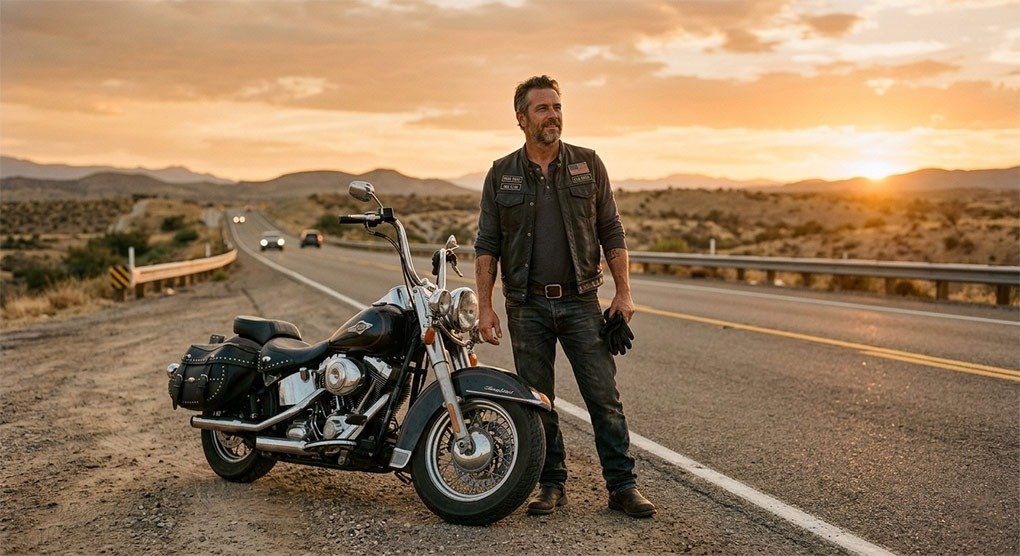
You’ve been riding long enough to know that the wrong leather vest will frustrate you every single time you put it on. The shoulders bunch up, the chest gapes, the leather feels like plastic, or worse, it starts cracking six months in. A leather motorcycle vest is one of the most personal pieces of gear a rider owns. It carries your patches, your club identity, your road miles. Getting it right the first time matters.
This guide covers everything a USA-based rider needs to know before buying: leather grades, fit mechanics, pocket features, sizing, and the questions most sellers won’t answer upfront.
What Makes a Leather Motorcycle Vest Different From a Fashion Vest
A riding vest and a fashion vest look alike until you put them side by side. A genuine motorcycle vest is built around three purposes: wind protection, patch-carrying capacity, and durability under road conditions.
The leather on a real riding vest runs between 1.1mm and 1.5mm thick. Fashion vests often use split-grain leather under 1.0mm, it cracks within a year under riding stress. A riding vest also has a back panel long enough to cover your lower back when seated on a bike, since the riding position shifts your shirt up. If your vest feels fine standing but gaps at the lower back while riding, it wasn’t cut for motorcycles.
The stitching on a riding vest is doubled or triple-stitched at stress points, the armholes, the side seams, the pocket openings. Single-stitch vests will start pulling apart at those areas within a riding season.
Leather Types: What’s Actually Inside That Vest
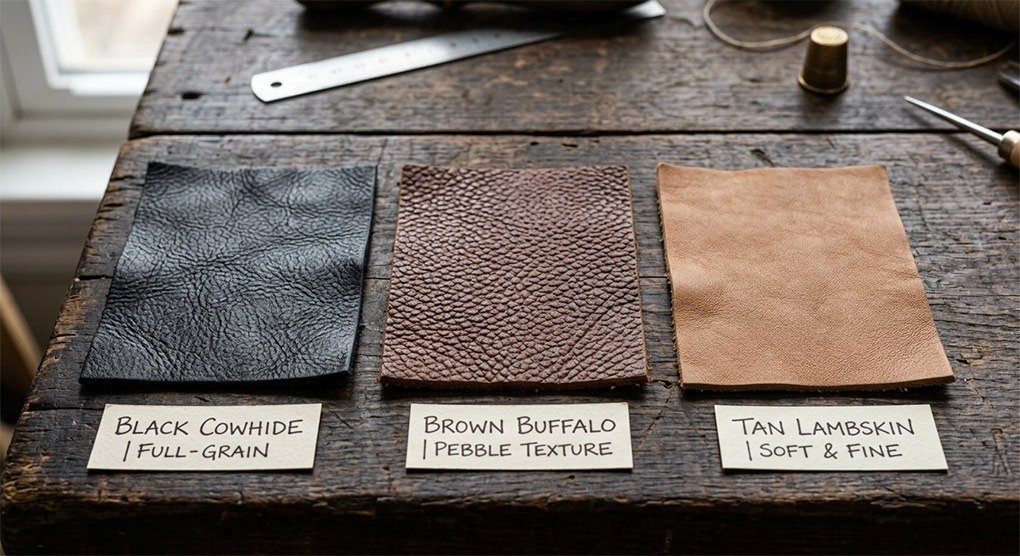
Full-Grain Cowhide
This is the gold standard for motorcycle vests. Full-grain means the outer surface of the hide is left intact, the natural grain, the pores, the small natural markings. That outer layer is the toughest part of any hide. Full-grain cowhide at 1.2mm–1.5mm is what serious riders want for everyday riding and club use.
It feels stiff when new and breaks in over time to conform to your body. A full-grain vest you buy today will look better in five years than it does now, provided you condition it properly.
Top-Grain Cowhide
The surface is sanded or buffed to remove imperfections, then a finish coat is applied. It looks cleaner and more uniform than full-grain, but that sanded surface is weaker. Top-grain is still a solid choice for casual riders and fashion-forward cuts.
Buffalo Leather
Buffalo (water buffalo, not American bison) is naturally pebble-textured and slightly thicker in its raw state. Once processed to riding thickness, it performs very similarly to cowhide. It takes longer to break in but carries that old-school heavy look that pairs perfectly with vintage and classic styles. It’s a popular choice for riders who want that heavy, armor-like feel.
Lambskin
Soft right out of the box. Beautifully supple. Not a riding leather, it’s too thin and too delicate for abrasion resistance. Lambskin vests are fashion pieces, excellent for women’s cropped styles or casual wear. Don’t use them on the bike expecting protection.
How Fit Actually Works on a Leather Vest
Leather doesn’t stretch like denim. It will conform slightly to your body over months of wear, but it won’t give you extra room the way a cotton shirt will. Getting the measurements right before you order is not optional, it’s how you protect your money.
Chest: Measure at the fullest point of your chest, arms relaxed at your sides, measuring tape parallel to the floor. This is your baseline measurement.
Waist: Measure around your natural waist, at the belly button. If your stomach is larger than your chest, use the stomach measurement as your base.
Back Length: Measure from the base of your neck (where it meets your shoulders) down to your belt line. Your vest should hit at or just above your belt so it covers your lower back while seated on the bike.
The +2 Rule for Concealed Carry: If you plan to carry a firearm inside the vest, add 2 inches to your chest measurement. This gives you room to draw and ensures the vest doesn’t print against the firearm.
Ride-Ready Rule: Always take your measurements while wearing what you’ll typically ride in. If you ride in a flannel or a hoodie under your vest, measure with that layer on.
Pocket Configuration: What You Actually Need
The pockets on a riding vest aren’t just storage, they’re part of the vest’s function on the road.
Outside chest pockets (two or four) handle the basics: phone, wallet, ID, registration. Look for snaps or zippers that are easy to operate with gloves on.
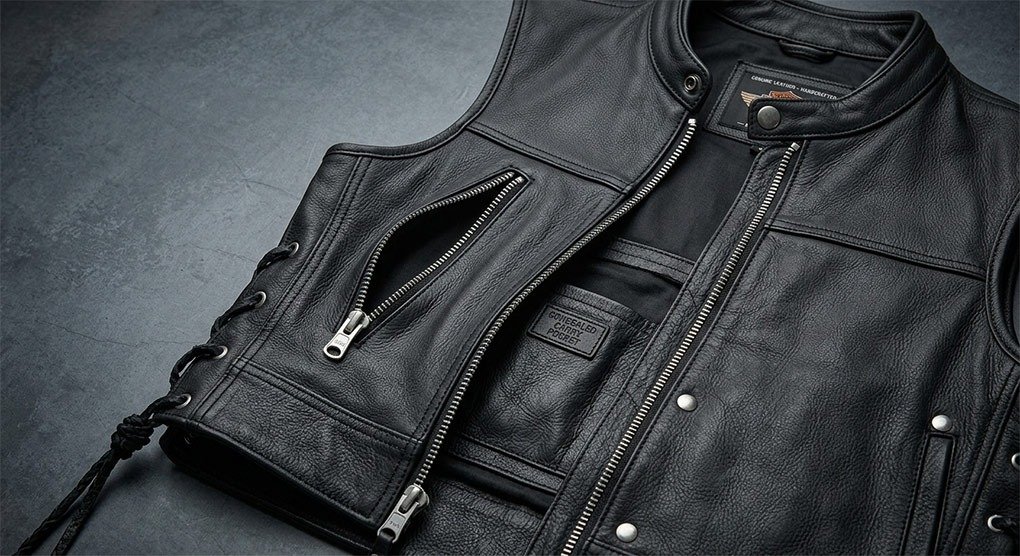
Inside gun pockets (concealed carry pockets) sit against the chest on the left or right side, accessible from inside the vest. If you’re a CCW holder, having a dedicated leather-lined pocket that positions the firearm correctly matters a lot. Don’t improvise with a regular inside pocket.
Lower hand warmer pockets or side slash pockets are useful on cooler rides, especially in the Midwest and Northern states during shoulder seasons.
Zippered security pockets on the inside or back of the vest protect cash, cards, or your phone from theft at crowded events like Sturgis or Daytona Bike Week.
Hardware: Snaps vs. Zippers
YKK zippers are the benchmark. If a vest listing doesn’t mention the zipper brand, ask. Cheap zippers on a vest start sticking and cracking in the first cold season.
Buffalo nickel snaps are the traditional choice on classic MC-style vests. They’re strong, they look authentic, and they won’t corrode. Avoid plain chrome snaps, they tarnish and weaken over time.
Side lacing (the leather strings along the sides of the vest) serves two purposes: adjustable fit and ventilation. Loosening the laces lets heavier air layers underneath, which is useful for late-season riding. Tight lacing gives a cleaner, more fitted silhouette.
Back Panel: Club-Ready vs. Fashion Cut
The back panel is where your identity lives. There are two configurations:
Full one-piece back: A single uncut panel with no seams. This is what you need if you’re going to sew or attach a center patch, top rocker, and bottom rocker. Any seam on the back panel will interfere with patch placement and looks wrong in a club context.
Pieced back (split back): Two or more panels stitched together. Some vests have a horizontal seam or vertical split. Fine for personal patches and non-club riding. Not appropriate for three-piece MC patches.
Back length for riders: The back of a riding vest should be slightly longer than the front. Most proper riding vests are cut this way to account for your forward lean when seated on the bike.
What to Watch Out For When Shopping Online
“Genuine leather” labels on cheap vests: Under US FTC guidelines, “genuine leather” can be any animal hide, including the lowest split layers bonded together with glue. A vest listed as “genuine leather” for under $50 is almost certainly a bonded leather product that will peel within months. Real cowhide vests start around $130–$180 for a quality product.
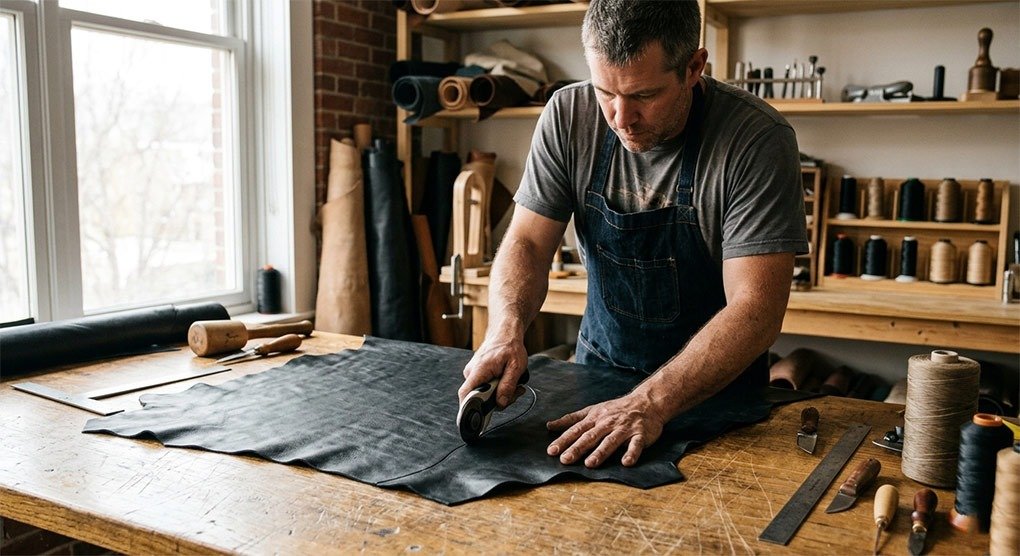
Pre-made inventory: Most mass-production sellers cut vests in batches and store them. Pre-cut leather is exposed to air, dust, and light before it ever reaches you, which affects the grain quality. Custom-cut to order is always preferable.
No sizing details: A seller that doesn’t provide a detailed measurement guide or accept custom sizing is selling you a gamble. Leather vest sizing can vary by 2–3 sizes from standard shirt sizing.
Price Guide: What to Expect to Pay
| Vest Type | Price Range | What You Get |
|---|---|---|
| Budget split-grain vest | $50–$100 | Basic riding vest, minimal pockets, shorter lifespan |
| Mid-range cowhide | $130–$180 | Full-grain or top-grain, standard features, good durability |
| Premium custom vest | $180–$280 | Custom sizing, fresh-cut leather, full feature set |
| Specialty leather (buffalo, shearling) | $250–$400 | Premium hides, extended craftsmanship |
Final Checklist Before You Buy
Before placing an order, confirm these points with any seller:
- What grade is the leather? (Full-grain, top-grain, or split?)
- What is the leather thickness? (Aim for 1.1mm minimum)
- Is the vest custom-made to order or pre-cut inventory?
- What brand are the zippers and snaps?
- Is the back panel a single piece for patch use?
- Does the seller offer a remake or repair if the vest doesn’t match specifications?
- What are the exact shipping and turnaround timeframes?
Conclusion
The best leather motorcycle vest is the one built to your measurements, from quality leather, with hardware that won’t fail you on the road. Take your measurements carefully, understand the leather grades, and don’t compromise on pocket configuration for the way you actually ride. A well-made vest worn regularly will look better and feel better every year. It becomes a part of you. That’s worth getting right the first time.
About author

Related posts
A good leather motorcycle vest comes down to five decisions: the right leather type for your riding style, an accurate chest-based size, a pocket layout... Continue reading
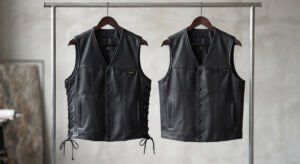
Side-lace vests use adjustable lacing at the ribcage for roughly 3–4 inches of torso adjustment — useful for riders who layer heavily by season or... Continue reading
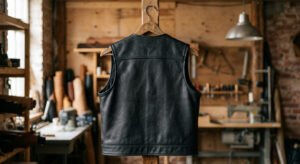
A patch-ready back panel is a single, uninterrupted piece of leather with no vertical center seam, cut from leather in the 2–3oz range (about 0.8–1.2mm)... Continue reading
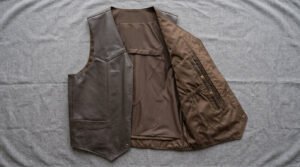
A true CCW-ready vest has one or more interior pockets sized and positioned to hold a holstered handgun at mid-chest level, opening toward the front... Continue reading
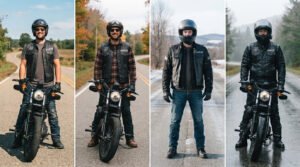
In summer, wear the vest alone over a lightweight or moisture-wicking shirt. In fall and spring, layer it over a flannel or thermal shirt. In... Continue reading
Add comment