
No products in the cart.
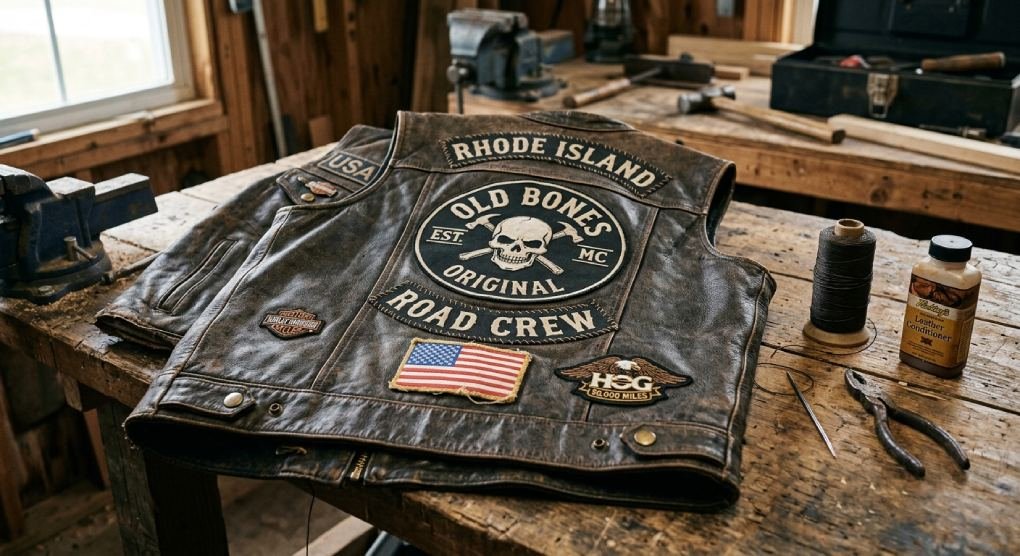
How Do You Sew Patches On A Leather Vest?
Adding patches to a leather vest is a popular way to personalize your gear, display club affiliation, honor military service, or create a custom look. The key is attaching the patch securely without weakening or damaging the leather. Leather requires different tools and techniques than denim or canvas. Every needle hole is permanent, so placement, thread choice, and stitching method matter.
This guide explains how to sew patches on a leather vest by hand or with a sewing machine, including the best tools, preparation steps, and common mistakes to avoid.
Can You Sew Patches on a Leather Vest?
Yes, patches can be sewn onto a leather vest by hand or with a leather-capable sewing machine. Sewing is usually the most durable method because it allows the patch to flex with the leather while staying firmly attached. Glue may be used to hold the patch in position before sewing, but it should not be relied on as the only attachment method. Adhesive can stiffen the leather, weaken over time, or cause patch edges to lift.
Tools and Materials You’ll Need
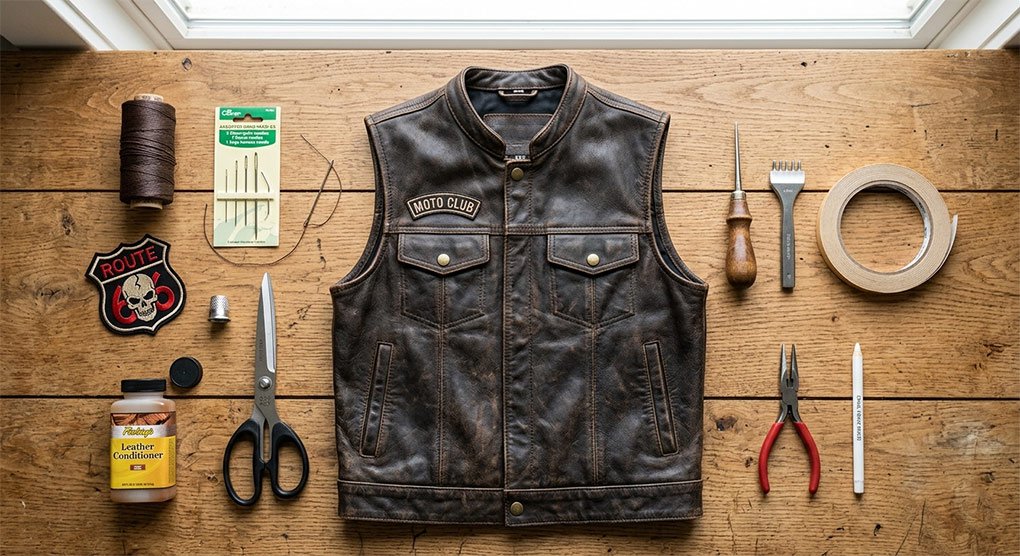
Before starting, gather the following:
- Leather vest
- Patch or patches
- Leather needle, glover needle, or heavy-duty hand-sewing needle
- Waxed polyester thread or bonded polyester thread
- Thimble
- Needle-nose pliers
- Scissors or thread snips
- Chalk or fabric pencil
- Double-sided leather tape or temporary fabric adhesive
- Leather conditioner
- Awl or leather punch, optional but recommended for thick leather
Avoid cotton thread. Polyester or nylon thread is stronger and more suitable for leather because it resists moisture, friction, and wear.
Choose the Right Needle and Thread
Leather Needle vs. Glover Needle
A standard fabric needle is not ideal for leather. It may bend, dull, or break. For hand sewing, use a leather needle or glover needle. Glover needles have sharp triangular points that pierce leather easily, but they can damage dense embroidery on patch borders. If your patch has a thick embroidered edge, consider pre-punching the leather holes and sewing through them with a strong needle.
Thread Selection
For thread, use waxed polyester thread for hand sewing or bonded polyester thread for machine sewing. These options provide strength and long-term durability.
Prepare the Leather Vest
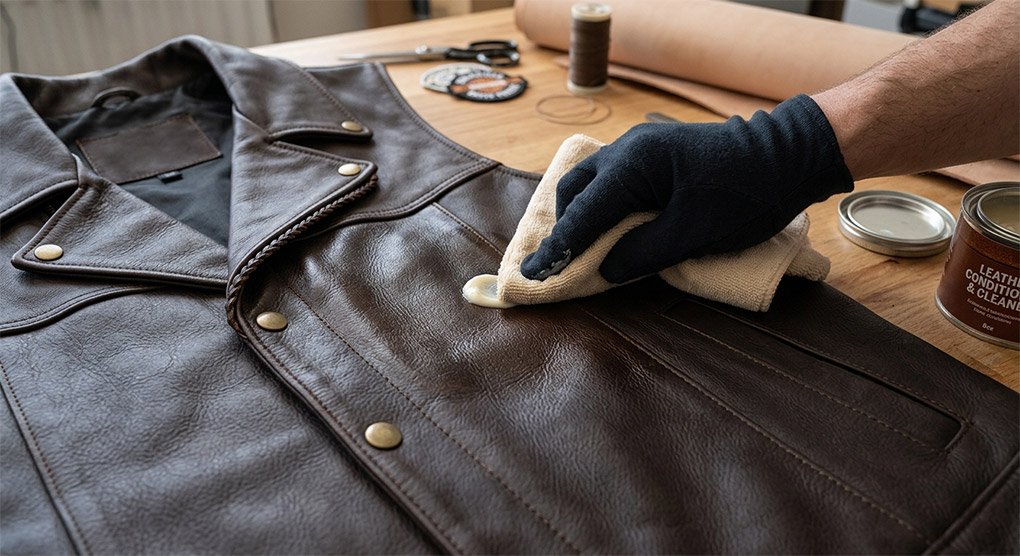
Start by wiping the vest with a clean, slightly damp cloth to remove dust or debris. If the leather feels dry or stiff, apply a small amount of leather conditioner and allow it to absorb before sewing. Do not over-condition the leather immediately before attaching the patch. Too much conditioner can make the surface slippery and may interfere with temporary adhesive or tape.
Position the Patch
Place the vest on a flat surface and decide where the patch should go.
Common Patch Placements
- Back panel for large patches
- Front chest area for name patches, service patches, or small designs
- Shoulder area for flags, ranks, or titles
- Side panels for smaller decorative patches
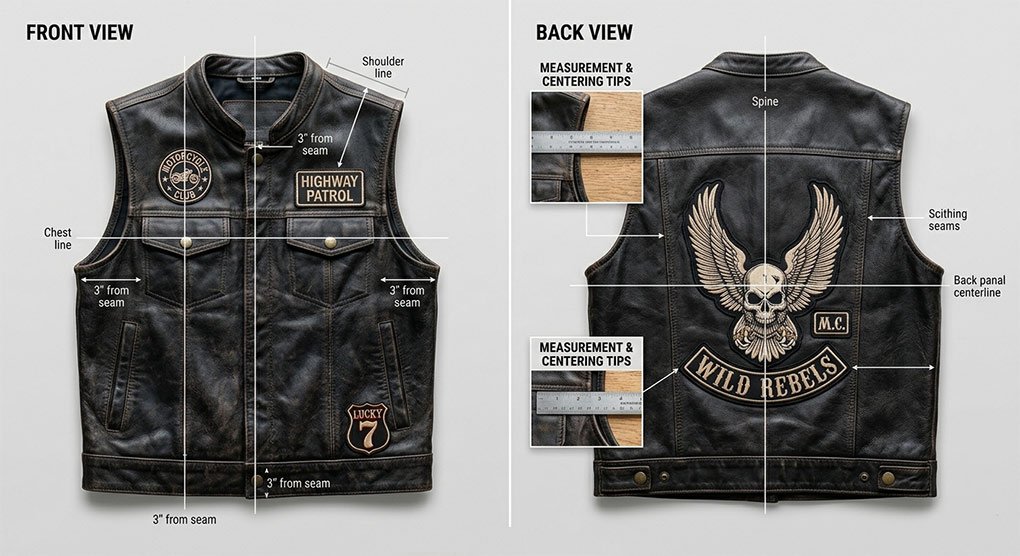
Check the alignment with seams, pockets, zippers, and existing patches. Use chalk or a fabric pencil to lightly mark the position. Before sewing, inspect the inside of the vest. Make sure you are not sewing through a pocket, liner, zipper flap, or hidden layer.
Secure the Patch Temporarily
Use double-sided leather tape or a small amount of temporary fabric adhesive to hold the patch in place. This prevents shifting while you sew. Avoid pins when possible. Pins create unnecessary holes in leather. Tape or adhesive should only be used as a positioning aid. The stitching should provide the permanent hold.
How to Sew a Patch on a Leather Vest by Hand
Hand sewing is the best option for most one-time patch applications. It gives you better control and reduces the risk of damaging the vest with an unsuitable machine.
Step 1: Thread the Needle
Cut about 18 inches of waxed polyester thread. Thread the needle and tie a strong knot at the end.
Avoid using a very long thread because it can tangle while sewing.
Step 2: Start from the Inside
Push the needle from the inside of the vest outward through the edge of the patch. This hides the knot inside the vest.
Use a thimble to protect your finger. If the leather is difficult to pierce, use needle-nose pliers to pull the needle through.
Step 3: Stitch Around the Patch
Sew around the patch using small, even stitches. Keep the stitches close to the patch border, usually about 1/8 to 1/4 inch from the edge.
A running stitch works well for most patches. A whip stitch can also be used, but it creates a more visible handmade look.
Keep the thread snug, but do not pull so tightly that the leather puckers.
Step 4: Finish and Knot the Thread
When you reach the starting point, push the needle to the inside of the vest. Slide the needle under an inside stitch, pull until a small loop forms, then pass the needle through the loop to create a knot.
Repeat the knot two or three times for security. Trim the excess thread.
Pre-Punching Holes for Thick Leather
For thick motorcycle leather or stiff vests, pre-punching holes makes the job easier and cleaner. Use an awl, leather punch, or stitching chisel to create evenly spaced holes around the patch edge. Then sew through the holes by hand.
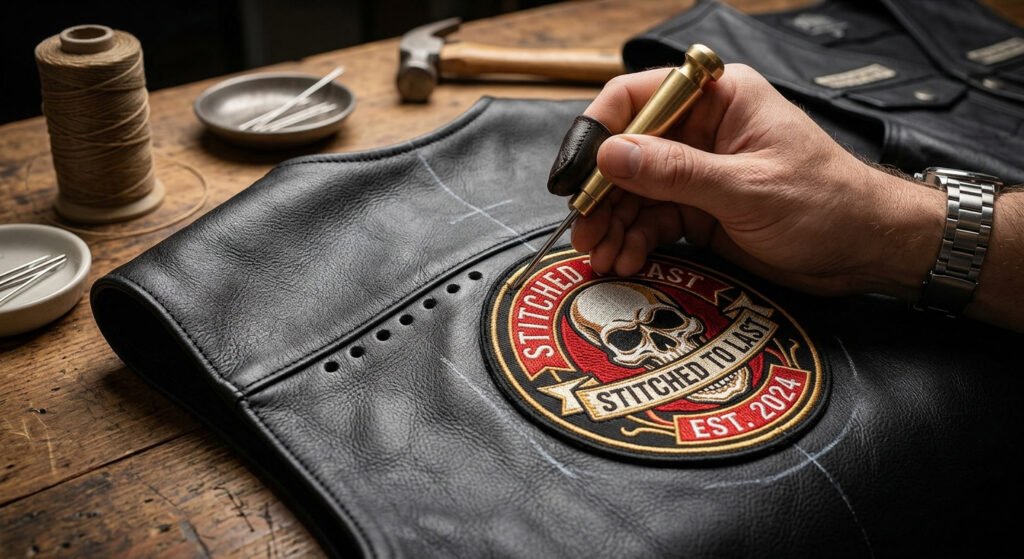
This method reduces strain on your hands, helps prevent bent needles, and creates more consistent stitching. Be careful not to make the holes too large, as oversized holes can weaken the leather or look unprofessional.
How to Sew a Patch with a Sewing Machine
A sewing machine can be used if it is strong enough for leather. A standard home machine may work on thin garment leather, but it may struggle with heavy motorcycle vests, padded leather, or multiple layers.
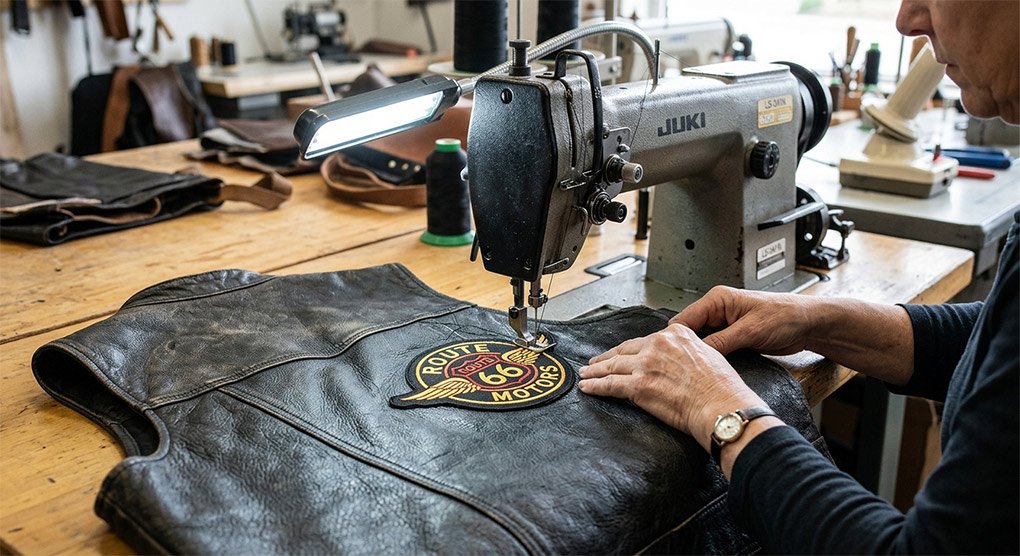
Machine Sewing Steps
- Install a leather or heavy-duty needle.
- Thread the machine with bonded polyester thread.
- Set a longer stitch length to avoid over-perforating the leather.
- Secure the patch with double-sided tape or temporary adhesive.
- Place the vest and patch under the presser foot.
- Stitch slowly around the patch edge.
- Turn carefully at curves and corners.
- Overlap the first few stitches when finishing.
- Trim loose threads.
If the machine skips stitches, breaks needles, jams, or struggles to feed the leather, stop. Forcing the machine can damage both the vest and the machine.
Sewing Around Pockets, Linings, and Seams
Before sewing, check the back side of the patch area. Many leather vests have inside pockets, hidden seams, or linings that can accidentally be sewn shut.
If the patch sits near a pocket, zipper, armhole, or thick seam, hand sewing may be safer than machine sewing. For complex placements, consider using a professional leatherworker or alteration shop.
Professional Options
For high-value vests, club patches, large back patches, or thick motorcycle leather, professional sewing may be the best choice.
Professionals may use:
- Flatbed leather sewing machines for large back patches
- Patcher machines for pockets and hard-to-reach areas
- Post machines for shoulder areas and curved sections
Many leather shops, motorcycle gear shops, dry cleaners with alteration services, and tailors near military bases offer patch sewing.
Common Mistakes to Avoid
Avoid these mistakes when sewing patches onto leather:
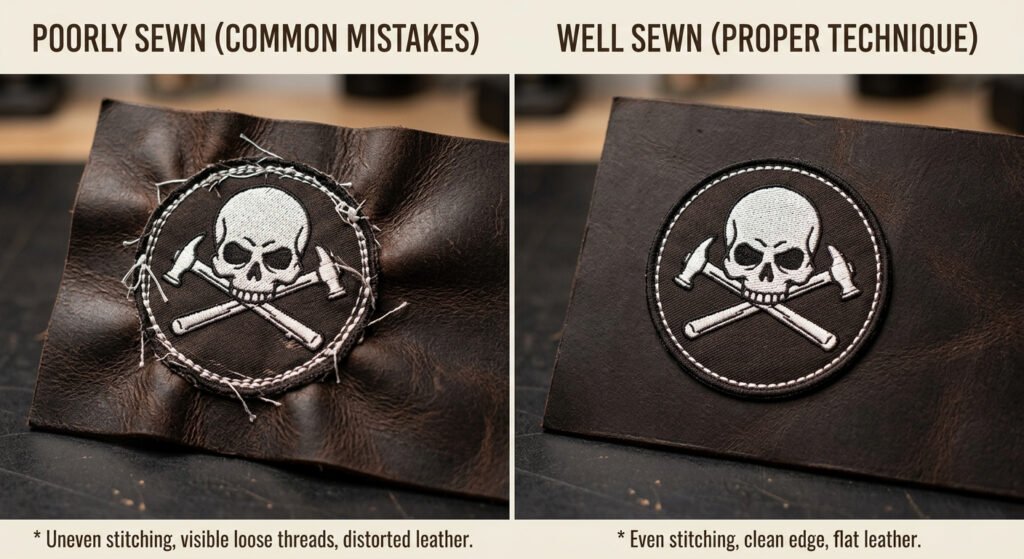
- Using cotton thread instead of polyester or nylon
- Using a regular fabric needle
- Placing the patch without checking alignment
- Sewing through pockets or linings
- Making stitches too close together
- Pulling the thread too tight
- Using pins that leave extra holes
- Relying on glue alone
- Using a machine that is not strong enough for leather
Aftercare
After the patch is sewn on, inspect the stitching to make sure the edges are secure and the patch lies flat. Apply a small amount of leather conditioner around the stitched area if the leather looks dry. Do not soak the stitching or patch.
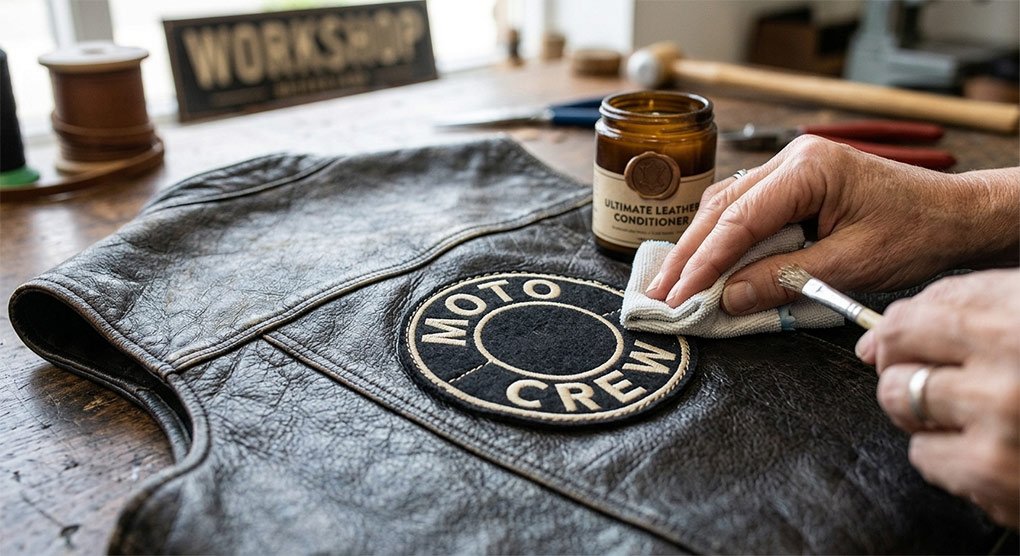
To maintain the vest, keep it clean, dry, and conditioned as needed. Avoid excessive moisture and store it on a sturdy hanger to help preserve its shape.
FAQs
What is the best thread for sewing patches on a leather vest?
Waxed polyester thread is best for hand sewing. Bonded polyester thread is a good choice for machine sewing. Both are durable and suitable for leather.
Can I sew patches on a leather vest by hand?
Yes. Hand sewing is a reliable method, especially for one or two patches. Use a leather needle, waxed thread, a thimble, and pliers if needed.
Can I glue patches onto a leather vest?
Glue can help hold the patch in place before stitching, but it should not replace sewing. Glue alone may fail as the leather bends and flexes.
Will sewing damage the leather?
Sewing creates permanent holes, but it should not damage the vest if done correctly. Use proper tools, plan the placement carefully, and avoid unnecessary holes.
Can I use a regular sewing machine?
A regular sewing machine may work on thin leather, but it is not recommended for thick motorcycle leather or padded vests. Use a leather-capable machine for heavier work.
Conclusion
Sewing patches on a leather vest is a durable and professional way to customize your gear. For best results, use a leather needle, polyester thread, and careful stitch spacing. Secure the patch with tape or temporary adhesive before sewing, and always check for pockets or linings behind the patch area.
For thick leather, large patches, or complex placements, pre-punch the holes or take the vest to a professional leatherworker. Done correctly, a sewn patch will stay secure, look clean, and hold up to regular wear.
About author

Related posts
A good leather motorcycle vest comes down to five decisions: the right leather type for your riding style, an accurate chest-based size, a pocket layout... Continue reading
Side-lace vests use adjustable lacing at the ribcage for roughly 3–4 inches of torso adjustment — useful for riders who layer heavily by season or... Continue reading
A patch-ready back panel is a single, uninterrupted piece of leather with no vertical center seam, cut from leather in the 2–3oz range (about 0.8–1.2mm)... Continue reading
A true CCW-ready vest has one or more interior pockets sized and positioned to hold a holstered handgun at mid-chest level, opening toward the front... Continue reading

In summer, wear the vest alone over a lightweight or moisture-wicking shirt. In fall and spring, layer it over a flannel or thermal shirt. In... Continue reading
Add comment